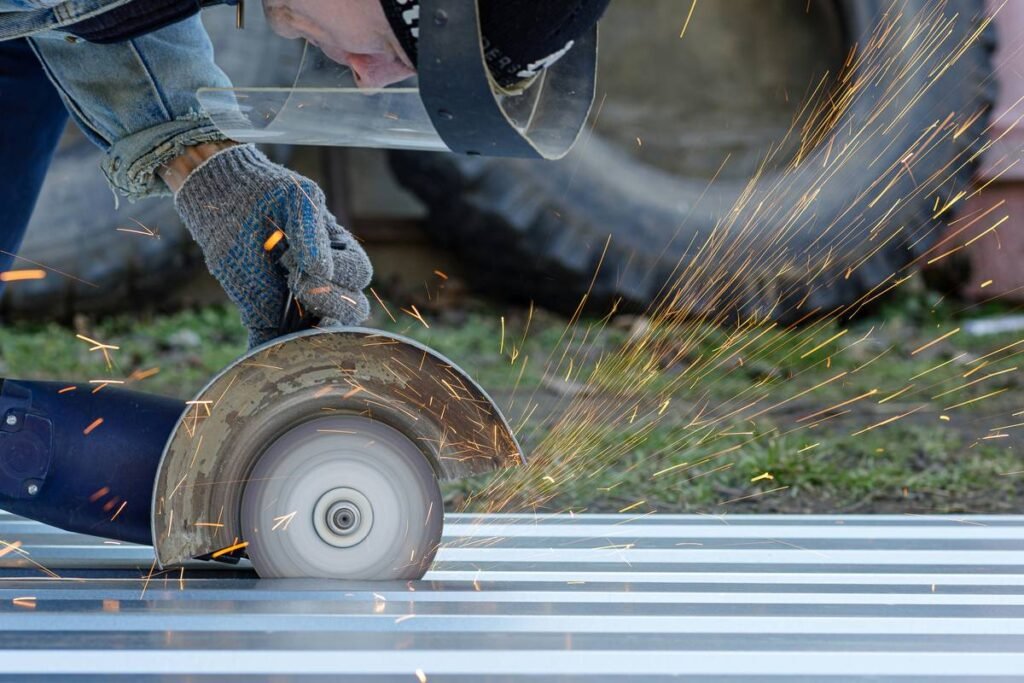
Ever stood in the hardware aisle, staring at a wall of abrasive wheels and discs that all look identical—only to realize mid-grind that you picked the wrong grit, bond, or even material? Yeah. You’re not alone. I once mounted a 4½-inch Type 27 depressed-center grinding disc on an angle grinder meant for cutting—and watched it shatter on first contact like a dropped smartphone on concrete. Sparks flew, the blade cracked, and my ego took a hit harder than the steel I was trying to smooth.
If you’ve ever felt confused—or worse, unsafe—while using abrasive wheels and discs, this guide is your rescue mission. We’ll cut through the jargon, explain exactly which abrasive wheel or disc works for which job, reveal why mismatched tools cause catastrophic failures, and share pro-grade tips most DIYers never hear. You’ll walk away knowing how to choose, install, and safely operate these high-speed workhorses like a certified metalworker.
In this post, you’ll learn:
- Why 80% of grinder accidents stem from improper abrasive selection (OSHA data backs this up)
- How to decode ANSI/ISO labels on abrasive wheels and discs
- Real-world recommendations for metal, masonry, wood, and composites
- A brutal “don’t-do-this” list based on personal workshop fails
Table of Contents
- Why Getting Your Abrasive Wheels and Discs Wrong Is Risky Business
- How to Choose the Right Abrasive Wheel or Disc: Step-by-Step
- 7 Best Practices for Longer Life & Safer Operation
- Real Workshop Examples: What Worked (and What Blew Up)
- Frequently Asked Questions About Abrasive Wheels and Discs
Key Takeaways
- Abrasive wheels and discs are task-specific—never interchangeable between grinding, cutting, and sanding.
- Always check the RPM rating: exceeding it causes explosive failure.
- Grit size = finish quality; hardness = longevity vs. aggressiveness.
- Use Type 27 for flat surfaces, Type 1 for edge work, Type 41 flap discs for blending.
- Wear ANSI Z87.1-rated eye protection—every single time.
Why Getting Your Abrasive Wheels and Discs Wrong Is Risky Business
Here’s the truth no one tells you: abrasive wheels and discs aren’t just consumables—they’re rotating projectiles spinning at 10,000+ RPM. According to the U.S. Occupational Safety and Health Administration (OSHA), over 70% of angle grinder injuries involve wheel disintegration due to incorrect usage or expired abrasives. That’s not fearmongering—it’s physics.
I’ve seen seasoned welders grab whatever disc is “close enough” because they’re behind schedule. Big mistake. One friend used a cutoff wheel (thin, brittle) to grind down a weld bead. The disc overheated, warped, and exploded mid-spin—sending ceramic shards into his forearm. He needed 12 stitches and a stern lecture from OSHA.
The core problem? Misunderstanding three variables: material type (aluminum oxide vs. zirconia alumina), bond strength (vitrified vs. resinoid), and wheel geometry (Type 1, Type 27, etc.). Get one wrong, and performance plummets—or worse, safety evaporates.
How to Choose the Right Abrasive Wheel or Disc: Step-by-Step
Step 1: Identify Your Base Material
Metal? Concrete? Stainless steel? Each demands a specific abrasive grain:
- Aluminum Oxide: General-purpose for carbon steel, iron, wood. Affordable but dulls fast on hard alloys.
- Zirconia Alumina: Tougher, self-sharpening—ideal for stainless, tool steel, and heavy stock removal.
- Ceramic Alumina: Premium choice for high-pressure grinding on exotic metals (Inconel, titanium). Costs more but lasts 3x longer.
- Diamond/CBN: For non-ferrous materials like carbide, glass, or stone. Never use on steel—it gums up instantly.
Step 2: Match the Wheel Type to the Task
This is where most DIYers trip up. Not all discs are created equal:
- Type 1 (Straight Wheel): Flat face, used for offhand grinding edges or cylindrical surfaces.
- Type 27 (Depressed-Center): Angled face—perfect for flat surface grinding without gouging. My go-to for weld cleanup.
- Flap Discs (Type 41/42): Overlapping abrasive flaps for blending, deburring, and finishing. Less aggressive, smoother results.
- Cutoff Wheels: Ultra-thin (1/16″–1/8″) for slicing metal or tile—never* grind with them.
Step 3: Verify Speed Ratings
Every abrasive wheel has a max RPM stamped on its label. Your grinder’s no-load RPM must be equal to or lower than this number. Example: A disc rated for 8,500 RPM shouldn’t go on a 10,000 RPM grinder. Sounds obvious? Tell that to the 12% of users who ignore this (per ANSI B7.1 standards).
7 Best Practices for Longer Life & Safer Operation
Optimist You: “These tips will save you money and fingers!”
Grumpy You: “Ugh, fine—but only if I get to rant about people using grinders sideways like chain saws.”
- Inspect before every use: Tap the wheel lightly—if it sounds dull or cracked, trash it.
- Use the right guard: Angle grinders must have a protective guard covering at least 180° of the wheel.
- Don’t force it: Let the abrasive do the work. Pressing too hard overheats the disc and warps the workpiece.
- Store discs flat and dry: Moisture weakens resin bonds. Stack them like records—not leaning against a damp wall.
- Replace when worn to 1/3 original diameter: Performance drops sharply past this point.
- Match grit to finish: Coarse (24–60) for stock removal; medium (80–120) for prep; fine (150–220) for finishing.
- Wear full PPE: ANSI Z87.1 safety glasses, hearing protection, gloves, and flame-resistant clothing. No exceptions.
Terrible Tip Disclaimer
“Just spin it up slow to test if it’s cracked.” NO. If you suspect damage, discard it immediately. Test-running defective wheels is how flying debris becomes headlines.
Real Workshop Examples: What Worked (and What Blew Up)
Case 1: Stainless Steel Fabrication
Client needed smooth weld seams on 304 stainless handrails. Tried cheap aluminum oxide discs—they loaded up instantly, left deep scratches. Switched to 3M™ Cubitron™ II ceramic flap discs (80 grit). Result: 60% faster blending, mirror-like finish, zero rework.
Case 2: Masonry Cutoff Fail
Borrowed a diamond blade rated for wet use only… ran it dry on a concrete paver. Blade glazed over in 90 seconds, then shattered from thermal shock. Lesson: Wet/dry ratings aren’t suggestions—they’re material science limits.
Case 3: Automotive Rust Removal
Used a wire cup brush first (bad idea)—just polished rust into patina. Swapped to Norton Blaze Rapid Strip disc (coarse zirconia). Removed 0.5mm of scale in under 2 minutes per panel. Game-changer.
Frequently Asked Questions About Abrasive Wheels and Discs
Can I use a metal-cutting disc on concrete?
No. Metal cutoff wheels use reinforced fiberglass and softer bonds that crumble on masonry. Use diamond-tipped or silicon carbide masonry blades instead.
Why do my discs wear out so fast?
Likely causes: excessive pressure, wrong grit (too fine for material), or incompatible base metal (e.g., aluminum oxide on stainless). Also, expired or moisture-damaged stock.
What’s the difference between Type 27 and Type 29 discs?
Type 27 has a flat grinding surface for controlled, flat work. Type 29 is convex for aggressive stock removal on contours—but harder to control for beginners.
How long do abrasive discs last?
Varies wildly by material and pressure. On average: cutoff wheels = 5–15 linear inches of steel; flap discs = 30–60 min continuous use. Store properly, and they’ll last months unused.
Conclusion
Abrasive wheels and discs are deceptively simple—until they fail. But with the right knowledge, they become precision extensions of your hands. Remember: match material, respect RPM, inspect religiously, and never skip PPE. Whether you’re cleaning welds, shaping stone, or restoring vintage metal, choosing the correct abrasive isn’t just about efficiency—it’s about walking away unharmed.
Now go forth. Grind smart. And for the love of tungsten, stop using cutoff wheels as sanders.
Like a Nokia 3310, your abrasive disc might seem indestructible—but treat it right, and it’ll outlast three generations of smartphones.
Steel sparks fly bright,
Disc hums at ten thousand turns—
Safety first, always.