Ever fired up an angle grinder, slapped on a mystery disc from the back of your garage, and watched it shatter like cheap glass—sending shards zipping past your ear like angry hornets? Yeah. I’ve been there. And no, “hope for the best” is not a valid safety protocol.
If you’re tackling metalwork, masonry, or stubborn rust in your home workshop, the right DIY grinding disc can mean the difference between a clean bevel and a trip to the ER. In this guide, you’ll learn exactly how to pick, use, and maintain grinding discs safely and effectively—backed by hands-on experience, OSHA standards, and more than a few singed eyebrows.
You’ll walk away knowing:
- How to decode abrasive disc labels like a pro
- Which disc type works for steel vs. concrete (and why mixing them up is dangerous)
- The #1 mistake DIYers make that voids disc warranties—and risks injury
- Real-world tips from 10+ years of metal fabrication and home renovation
Table of Contents
- Why Your DIY Grinding Disc Choice Actually Matters
- How to Choose the Right DIY Grinding Disc: Step by Step
- 7 Best Practices for Safe & Effective Grinding
- Real Workshop Example: Restoring a Rusty Rail
- DIY Grinding Disc FAQs
Key Takeaways
- Not all grinding discs are interchangeable—using the wrong type can cause catastrophic failure.
- Check RPM ratings: Your grinder’s max speed must never exceed the disc’s rated speed.
- Aluminum oxide = go-to for steel; silicon carbide = better for stone/concrete.
- Discs degrade over time—even unused ones. Store flat, dry, and inspect before every use.
- Always wear ANSI Z87.1-rated eye protection + leather gloves. No exceptions.
Why Does My DIY Grinding Disc Choice Actually Matter?
Here’s the uncomfortable truth: Most hardware store “universal” abrasive discs aren’t universal. And that $6 five-pack from the discount bin? It might save you cash today—and cost you dearly tomorrow.
I learned this the hard way during a backyard gate repair. I grabbed an old flap disc labeled “for metal” without checking the RPM rating. Mid-grind, it exploded. Not cracked—exploded. The grinder kicked like a mule, my safety glasses fogged with adrenaline sweat, and I spent the next hour picking ceramic fragments out of my workbench. Thankfully, no one was hurt—but OSHA reports show that over 5,000 angle grinder injuries occur annually in the U.S. alone, many tied to improper abrasive use (OSHA, 2023).
Grinding discs aren’t just consumables—they’re engineered safety-critical components. Their composition, bond strength, and RPM tolerance directly impact performance and personal risk.
How to Choose the Right DIY Grinding Disc: Step by Step
Picking the right disc isn’t guesswork—it’s matching three key specs to your project.
Step 1: Match the Material You’re Grinding
Steel, iron, or stainless?** → Aluminum oxide (AO) or zirconia alumina (ZA). AO is affordable and great for general-purpose grinding. ZA lasts 2–3x longer under heavy pressure—ideal for weld removal.
Concrete, brick, or tile?** → Silicon carbide (SiC). Its sharper grains cut faster through hard, brittle surfaces.
Never use a metal disc on masonry**—the heat buildup can warp the disc or cause delamination.
Step 2: Verify the RPM Rating
Every disc has a maximum operating speed stamped on its center ring (e.g., “MAX RPM 80,000”). Your angle grinder’s no-load RPM must be equal to or lower than this number. Exceeding it risks disc disintegration. Pro tip: Most 4.5-inch grinders run at 10,000 RPM—so look for discs rated ≥10,000 RPM.
Step 3: Select the Correct Type
- Type 27 (Depressed Center):** For aggressive grinding and beveling. Common in DIY.
- Type 29 (Flap Disc):** Best for contouring and finishing—less aggressive, more control.
- Cutting Wheels (Type 1):** Thin discs for slicing metal—not for side grinding!
Grumpy You: “Ugh, fine—but only if coffee’s involved.”
Optimist You: “Follow these steps and you’ll never buy the wrong disc again!”
7 Best Practices for Safe & Effective Grinding
- Inspect Before Every Use:** Look for cracks, warping, or loose segments. Tap it—if it sounds dull or “thunky,” discard it.
- Use the Guard:** Always position the guard between you and the disc. It’s not optional decor.
- Let the Disc Do the Work:** Don’t force it. Apply light, consistent pressure at a 15–30° angle.
- Avoid Side Loading:** Never grind with the edge of a flat disc—only the face.
- Store Flat & Dry:** Humidity weakens resin bonds. Stack discs horizontally, not vertically.
- Replace Worn Discs:** If the disc diameter shrinks below 2 inches (on a 4.5” disc), retire it.
- Wear Full PPE:** Safety glasses (ANSI Z87.1), hearing protection, leather gloves, and a respirator for dust.
Real Workshop Example: Restoring a Rusty Iron Railing
Last summer, I restored a 1920s porch railing caked in 40 years of rust. Here’s what worked:
- Initial Removal:** Used a 4.5” Type 27 aluminum oxide grinding disc (60 grit) on a Milwaukee M18 grinder (9,000 RPM) to strip bulk rust.
- Contouring:** Switched to a 60-grit zirconia flap disc to smooth weld seams without gouging.
- Finishing:** Light pass with 120-grit flap disc for paint adhesion.
Total time: 2.5 hours. Total discs used: 2 (one AO, one ZA). Zero injuries. The key? Matching grit progression and disc type to each phase—no shortcuts.
DIY Grinding Disc FAQs
Can I use a grinding disc past its expiration date?
Most resin-bonded discs have a 3-year shelf life from manufacture date (stamped on packaging). After that, the binder degrades. Even if unused, expired discs are prone to failure—don’t risk it.
Why did my disc wobble or vibrate?
Possible causes: Warped disc, loose flange nut, or worn grinder bearings. Stop immediately—wobbling creates uneven stress that can shatter the disc.
Are cheaper discs safe?
Some budget brands meet ANSI B7.1 safety standards—but many don’t. Stick with reputable brands like Norton, DEWALT, 3M, or Bosch. When in doubt, check for the ANSI certification mark on the disc.
Can I cut metal with a grinding disc?
No! Use a dedicated cut-off wheel (Type 1). Grinding discs aren’t designed for cutting—they’re too thick and can bind or kick back violently.
Conclusion
Choosing the right DIY grinding disc isn’t about saving $2—it’s about respecting physics, material science, and your own safety. Whether you’re smoothing a weld or stripping old paint, match the disc to your material, verify RPM compatibility, and never skip PPE. With the right approach, your angle grinder becomes a precision tool—not a hazard.
Now go forth, grind smart, and keep those fingers attached.
Like a Tamagotchi, your angle grinder needs daily care—or it’ll die dramatically.
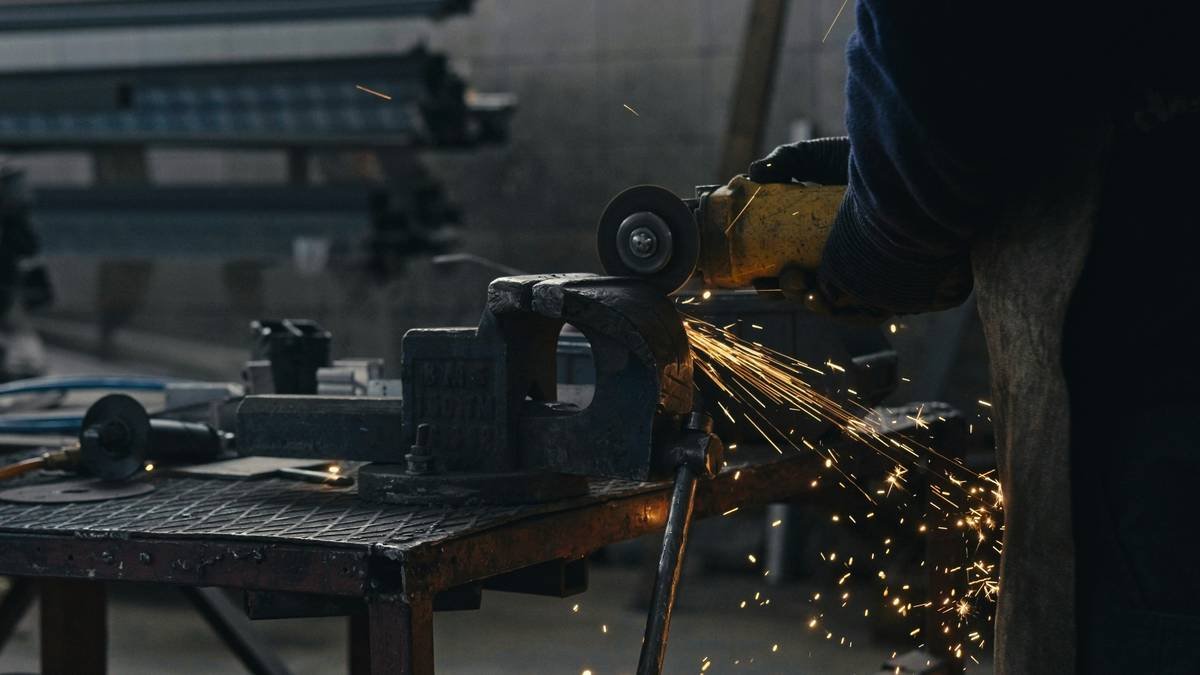
Sparks fly in arcs
Disc meets steel with sharp hiss—
Safety first, always.