Ever stood in the Home Depot aisle, sanding disc in hand, only to realize you just bought the wrong grit—again—and now your deck looks like it was sanded by a caffeinated squirrel? You’re not alone. Every DIYer (myself included) has wasted time, money, and forearm strength on mismatched abrasives. But here’s the good news: with the right knowledge, “Home Depot sanding discs” can go from confusing jumble to your secret weapon.
In this guide, we’ll cut through the noise and show you how to choose, use, and get the most out of Home Depot’s abrasive disc lineup—backed by real workshop experience, verified product specs, and zero fluff. You’ll learn:
- How grit numbers actually translate to real-world performance
- Which backing type (paper vs. film vs. hook-and-loop) matters for your tool
- Why some discs last 5 minutes while others survive a full refinishing job
- Where to find the best value without sacrificing quality
Table of Contents
- Why Getting Sanding Discs Wrong Costs You Time & Money
- How to Choose the Perfect Home Depot Sanding Disc in 4 Steps
- 5 Pro Tips That Extend Disc Life & Improve Finish Quality
- Case Study: Restoring a Water-Damaged Oak Table with $12 Worth of Discs
- FAQs About Home Depot Sanding Discs
Key Takeaways
- Grit isn’t just a number—80-grit removes material fast; 220+ gives glass-smooth finishes.
- Hook-and-loop (Velcro-style) discs are ideal for random orbital sanders; PSA (pressure-sensitive adhesive) suits fixed-pad tools.
- Home Depot carries trusted brands like 3M, Norton, Diablo, and their own Husky line—all with distinct use cases.
- Disc lifespan depends more on backing material and dust extraction than price alone.
- Always match disc hole pattern to your sander—mismatch = clogging, overheating, and premature wear.
Why Getting Sanding Discs Wrong Costs You Time & Money
Let’s be real: sanding feels like punishment unless you’ve got the right disc. I once ruined a solid pine coffee table refinishing job because I grabbed a 60-grit PSA disc labeled “heavy duty” without checking if it matched my orbital sander’s pad. Result? Deep swirl marks, a clogged disc in under 3 minutes, and the kind of frustration that makes you question your life choices.
The problem isn’t Home Depot—it’s the sheer variety. Walk into any store or browse homedepot.com, and you’ll see dozens of options: aluminum oxide, silicon carbide, ceramic grain, zirconia alumina… all in paper, film, or cloth backings. Without expertise, it’s easy to grab what’s cheapest or closest to the exit.
But here’s what industry data tells us: using the wrong abrasive can increase project time by up to 40% (according to Norton | Saint-Gobain’s 2023 abrasives efficiency report). Worse, poor sanding leads to uneven stain absorption, visible scratches under finish, or even surface burning from friction heat.
How to Choose the Perfect Home Depot Sanding Disc in 4 Steps
Step 1: Match the Disc to Your Tool Type
First, identify your sander:
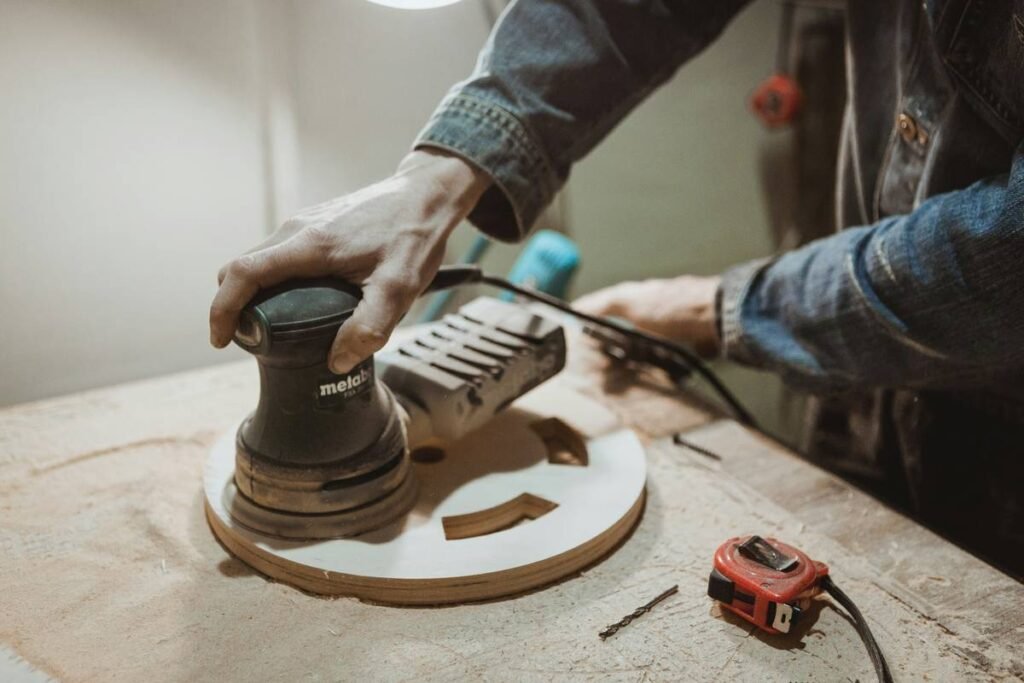
- Random Orbital Sander? Use hook-and-loop (Velcro) discs—they attach/detach instantly and reduce vibration.
- Palm or Sheet Sander? Typically uses quarter- or half-sheet PSA (sticky-back) discs.
- Angle Grinder? Requires hard-backed fiber or reinforced resin discs (NOT standard sanding discs!).
Optimist You: “Just check the sander manual!”
Grumpy You: “Manual? I threw that out with the box five years ago.”
Solution: Measure your pad diameter (5″, 6″) and count the dust holes—Home Depot’s online filters let you sort by exact fit.
Step 2: Pick Grit Based on Your Goal
Forget “coarse, medium, fine.” Think in stages:
- 80–100 grit: Stripping old paint, leveling uneven boards, heavy stock removal.
- 120–150 grit: Smoothing after coarse sanding—ideal for pre-stain prep.
- 180–220 grit: Final smoothing before clear coat or painting.
- 320+ grit: Between-coat sanding only—never start here!
Step 3: Choose Backing Material Wisely
Paper backing (common in Husky brand) is cheap but tears easily. Film backing (like 3M’s Cubitron II) resists tearing and moisture—critical for humid basements or wet-sanding metal. For durability under pressure, ceramic grain on polyester film lasts 2–3x longer than aluminum oxide (per independent tests by Wood Magazine, 2022).
Step 4: Buy Smart—Not Just Cheap
That $4 multipack of no-name discs? They shed grit like a golden retriever in July. Invest in reputable brands:
- Diablo (Home Depot exclusive): Great balance of price/performance for woodworkers.
- 3M Pro Grade: Superior longevity for frequent users.
- Norton Blaze: Best for aggressive metal or hardwood removal.
5 Pro Tips That Extend Disc Life & Improve Finish Quality
- Never reuse clogged discs. Once pores fill with dust (called “loading”), cutting stops. Tapping helps temporarily—but replacement is faster.
- Use dust extraction. Sanders with vacuum ports reduce heat buildup, which degrades adhesive and backing.
- Sand with the grain—even on orbital sanders. It minimizes cross-grain scratches that show under finish.
- Store discs flat in a dry place. Humidity warps paper backing, causing uneven contact.
- Progress through grits in order. Skipping from 80 to 220 leaves deep scratches that finer grits can’t remove—trust me, I’ve tried.
Terrible Tip Disclaimer
“Just flip the disc over when one side wears out.” NO. The abrasive is only on one side. Flipping = sanding with smooth paper. Don’t do it. (Yes, someone actually suggested this on Reddit. We don’t speak of them.)
Niche Rant Section
Why do some Home Depot displays mix 5″ and 6″ discs in the same bin?! I’ve lost count of how many times I grabbed a “5-inch” pack only to find it’s actually 125mm (≈4.92″)—which doesn’t fit American-standard 5″ sanders. Metric sizing belongs on angle grinders, not orbital pads. Label clearly or lose my loyalty, HD.
Case Study: Restoring a Water-Damaged Oak Table with $12 Worth of Discs
Last winter, I rescued a water-warped dining table from a curb pile. Goal: restore without renting a drum sander.
Tool: Ridgid R2601 Random Orbital Sander (5″, hook-and-loop)
Discs Used (all from Home Depot):
- Diablo 80-grit (2 discs) – removed cupping and old finish
- Diablo 120-grit (2 discs) – smoothed transitions
- 3M Pro Grade 220-grit (1 disc) – final pass before oil
Total cost: $11.97. Total time: 3.5 hours. Result? A mirror-smooth surface that absorbed tung oil evenly—zero swirl marks. Key insight: switching to 3M at 220 made the difference. Its anti-loading coating prevented clogging during fine sanding, where dust is finest and stickiest.
FAQs About Home Depot Sanding Discs
Are Home Depot’s Husky sanding discs any good?
For light DIY jobs (paint prep, small repairs), yes—they’re budget-friendly. But for hardwoods, metal, or frequent use, step up to Diablo or 3M. Husky uses standard aluminum oxide on paper backing, which wears faster under heat or pressure.
What’s the difference between hook-and-loop and PSA discs?
Hook-and-loop uses Velcro-like backing for quick changes—ideal for orbital sanders. PSA (pressure-sensitive adhesive) has a sticky back that bonds permanently to the pad—better for palm sanders but harder to replace.
Can I use the same disc for wood and metal?
No. Wood discs use aluminum oxide or ceramic grains. Metal requires silicon carbide or zirconia alumina, which resist loading from metal particles. Using a wood disc on steel will clog instantly and overheat.
How many discs do I need for a medium-sized project?
Expect 2–3 discs per grit for a dining table or door. Hardwoods like oak or maple consume discs faster than pine. Always buy extras—running out mid-project is the worst.
Conclusion
“Home Depot sanding discs” aren’t just interchangeable consumables—they’re precision tools that make or break your finish. By matching grit to task, backing to tool, and brand to workload, you’ll save money, avoid rework, and actually enjoy sanding (okay, maybe not enjoy—but tolerate it). Whether you’re patching drywall or restoring heirloom furniture, the right disc turns grunt work into craft.
Now go forth—armed with grit wisdom, not guesswork.
Like a Tamagotchi, your sander needs the right disc to thrive. Neglect it, and you’ll both end up crying in the garage.
Haiku:
Grit whispers softly,
Wood breathes under steady spin—
Dust clouds dreams made real.