You bought an angle grinder. You need to cut stone—flagstone, granite, maybe old masonry. But your disc wobbles, chips, or worse—it shatters mid-cut. Frustration spikes. Dust clouds your vision. Time ticks away. The truth? Most DIYers grab the wrong angle grinder discs for stone because hardware store labels lie by omission.
Why Standard Abrasive Discs Fail on Stone
Stone isn’t metal. It’s brittle, abrasive, and unforgiving. A standard Type 1 depressed-center grinding disc—built for steel welds—lacks the bond hardness needed for siliceous materials like sandstone or limestone. And resin-bonded cutoff wheels? They gum up fast on dense granite.
The core flaw? Misalignment between material removal rate (MMR) and disc friability. Stone demands a disc that wears *just enough* to expose fresh grit—but not so much it disintegrates under lateral pressure. Get this balance wrong, and you’re not cutting. You’re gambling.
How to Select & Use Angle Grinder Discs for Stone
Match Disc Type to Stone Composition
Soft stones like limestone need softer bonds—they wear faster, exposing new diamond segments quickly. Hard stones like quartzite demand harder bonds to prevent glazing. Never assume “masonry” means one-size-fits-all.
Diamond vs. Abrasive: The Real Trade-Off
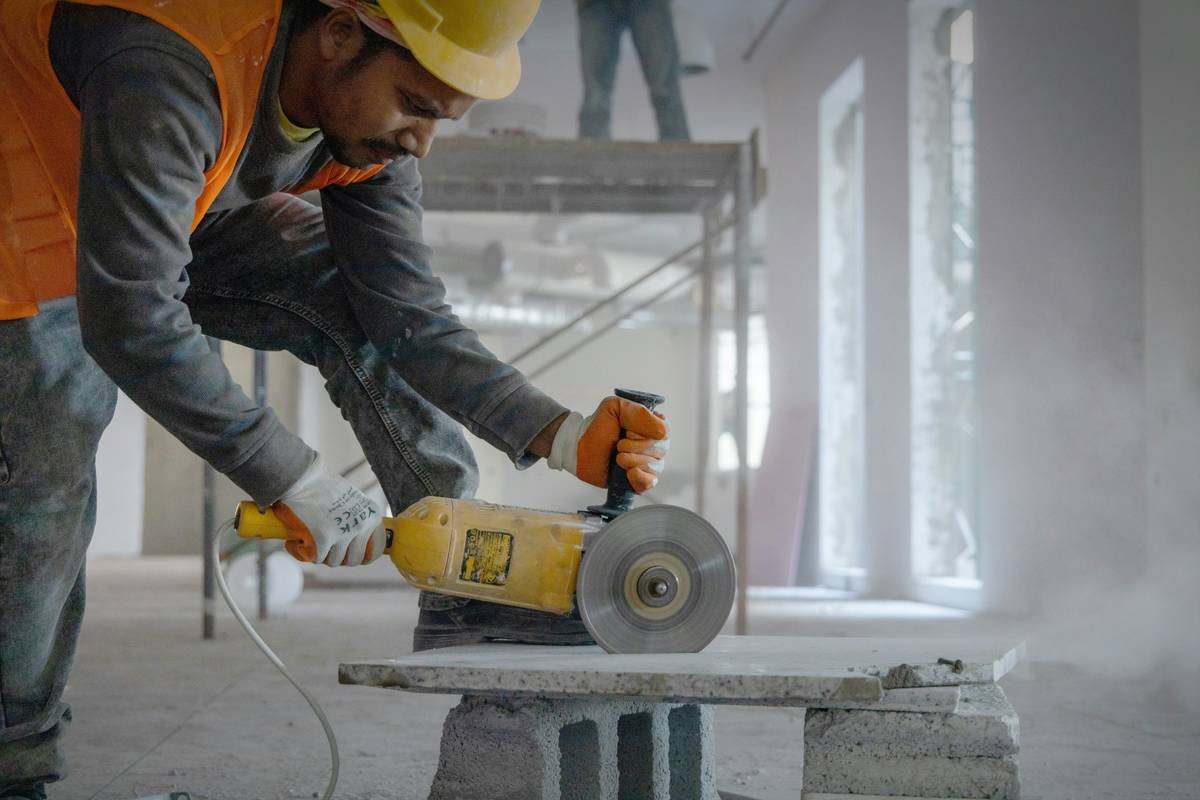
Diamond blades last longer but cost more upfront. Abrasive (aluminum oxide or silicon carbide) discs are cheaper but burn through on repeated cuts. For one-off patio jobs? Abrasive might suffice. For professional stone fabrication? Diamond is non-negotiable.
RPM Ratings Aren’t Suggestions—They’re Red Lines
Your grinder runs at 10,000 RPM. Your disc is rated for 8,500? That mismatch causes catastrophic failure. Always check the disc’s maximum RPM stamped on the metal ring—and never exceed it. Stone cutting generates insane heat; overspeeding softens the bond instantly.
| Disc Type | Best For | Avg. Cost per Cut* | Lifespan (Cuts) |
|---|---|---|---|
| Diamond Segmented Rim | Granite, Basalt, Engineered Stone | $0.45 | 80–120 |
| Silicon Carbide Abrasive | Limestone, Sandstone, Brick | $0.12 | 8–15 |
| Resin-Bond Diamond | Polished Marble (wet only) | $0.60 | 50–70 |
*Based on 4.5-inch discs cutting 1.5-inch-thick material in controlled conditions.
The Industry Secret: Wet Cutting Isn’t Just for Pros
Most home users avoid water because “it’s messy.” Big mistake. A light mist—applied via spray bottle or wet-cutting attachment—drops disc temperature by over 300°F. That prevents thermal shock in natural stone and extends disc life by 40% or more. And yes, you can do this safely with a standard angle grinder if you use GFCI protection and keep water away from the motor housing. The real secret? Professionals don’t always use wet saws—they adapt. So should you.
FAQ
Can I use a metal-cutting disc on stone?
No. Metal-cutting discs use zirconia alumina optimized for ductile materials. On stone, they overheat, crack, and can explode.
What thickness of disc is best for stone?
For clean, precise cuts in thin veneer: 0.045”. For demolition or thick slabs: 0.095” gives stability and reduces flex.
Are diamond discs worth it for occasional use?
If you’ll cut more than 20 linear feet of stone total, yes. Their longevity offsets the initial cost—even for weekend warriors.